A triage assistant the clinicians actually opened.
Six weeks from audit to a live pilot handling a third of inbound messages.
Triage was eating the morning.
Every message arrived in one queue, and a clinician read all of them before anything could be routed. The backlog set the tone for the rest of the day.
- One undifferentiated inbound queue
- Clinical time spent on routing, not care
- No way to see what was waiting
Read first, route second.
-
01
Discover
Two weeks inside the workflow: what it costs today, where it breaks, and which parts a model can genuinely carry.
-
02
Shape
A costed plan with the model chosen, the interface sketched and the success measure agreed before anything is built.
-
03
Build
Weekly releases against real traffic, with evaluation sets that grow as the edge cases surface.
-
04
Hand over
Your team ships the next change. We leave the runbook, the evaluations and a month of support behind us.
A third of inbound never reaches a clinician.
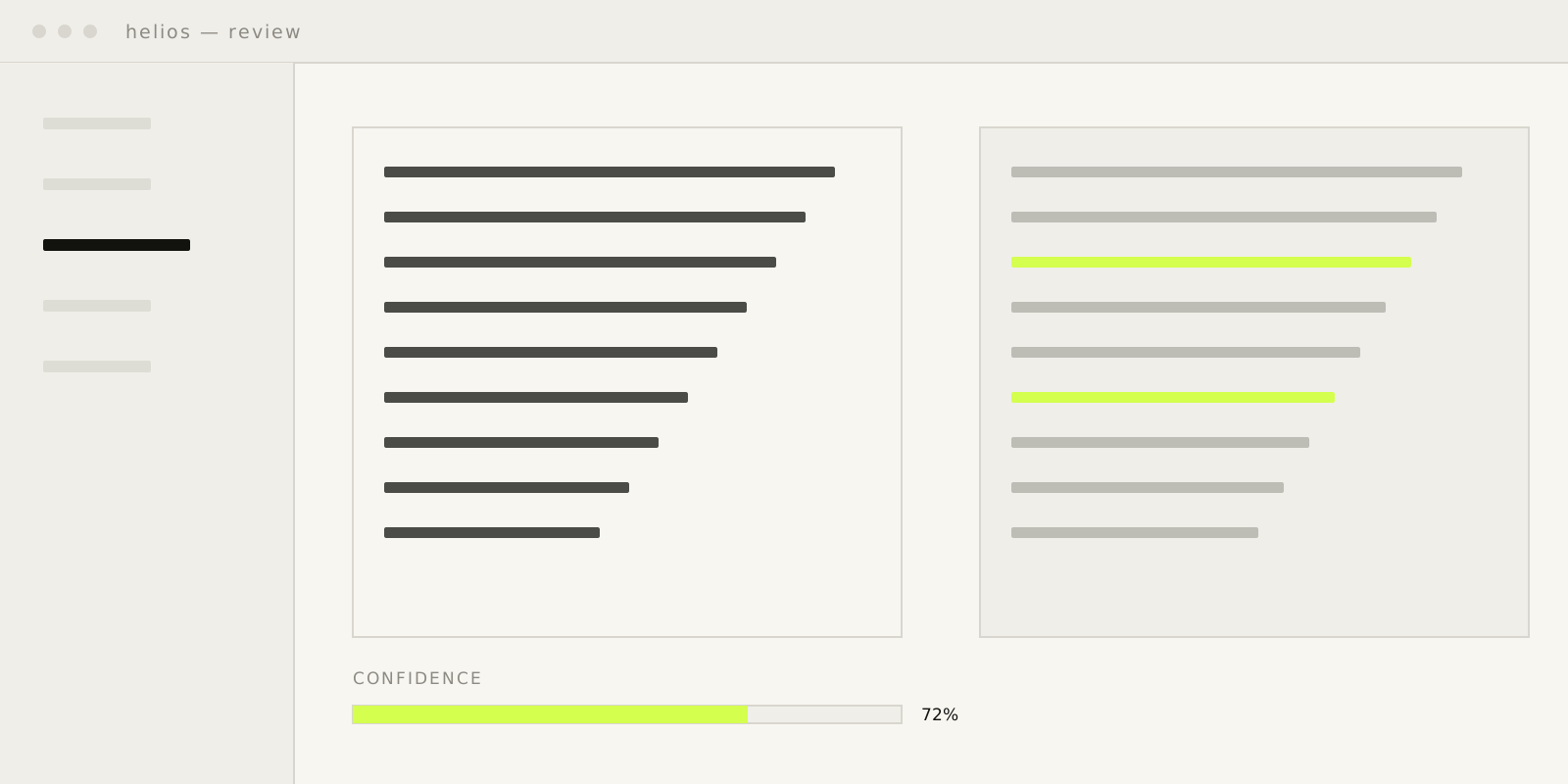
Not because it was hidden, but because it was answered — with the source attached and the confidence on show, so the team could tell at a glance which answers to check.
They shipped a working assistant in six weeks, then spent the seventh teaching our team to run it without them.
One workflow, end to end: inbound triage from arrival to assignment.
Built on the customer's existing model contract and record system. No new infrastructure.
Runbook, evaluation sets and a month of support. The team has shipped four changes since.
Have a workflow in mind?
Two weeks from question to costed plan. Tell us the job to be done and we will tell you whether a model is the right tool for it.